As a coach, you live with scheduling realities that make your job harder:
Last-minute changes. Gym conflicts. Travel confusion. Inconsistent schedules. Parent frustration.
Most of these problems start long before schedules reach you.
Modern scheduling systems help fix them at the source—so you can spend less time managing logistics and more time coaching.
What Changes With Better Scheduling
Fewer Late Changes
The problem: Schedule changes after publication disrupt practice plans, force communication scrambles, and create parent frustration.
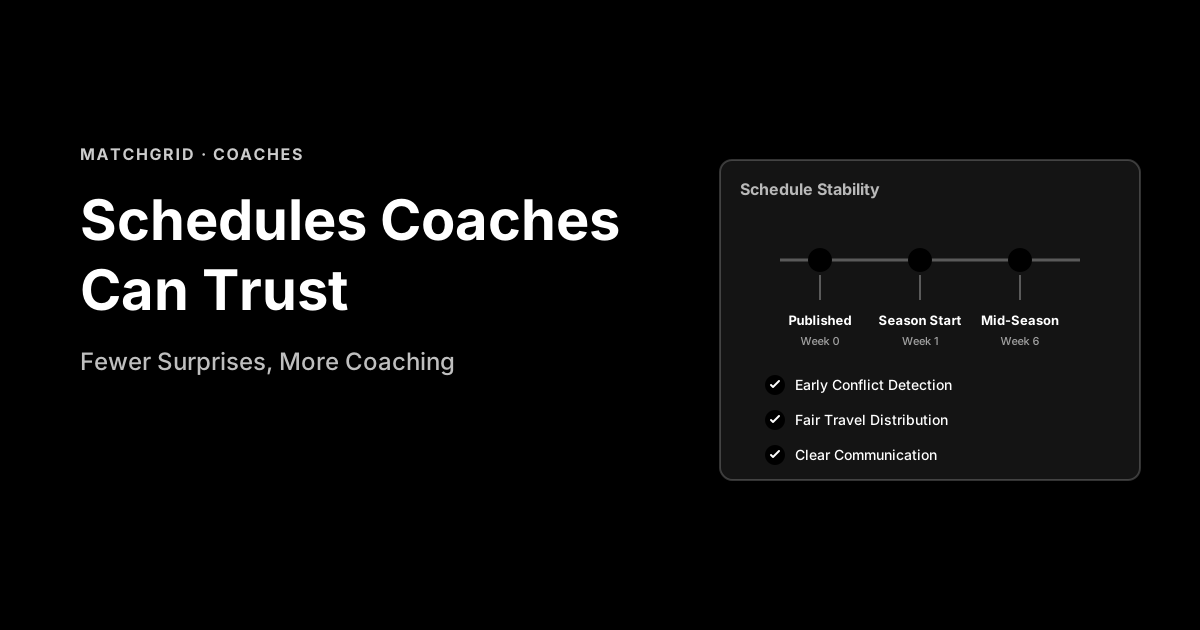
What changes: Conflicts are caught early during schedule validation, before calendars are finalized and sent to families.
Early conflict detection means:
- Venue double bookings identified before publication
- Travel constraint violations flagged during planning
- Academic calendar conflicts resolved proactively
- Official availability checked before assignments made
You receive schedules that stay stable through the season.
Fairer Scheduling
The problem: Manual scheduling often creates unintentional advantages—some teams get more home games, easier travel, or better opponent sequencing.
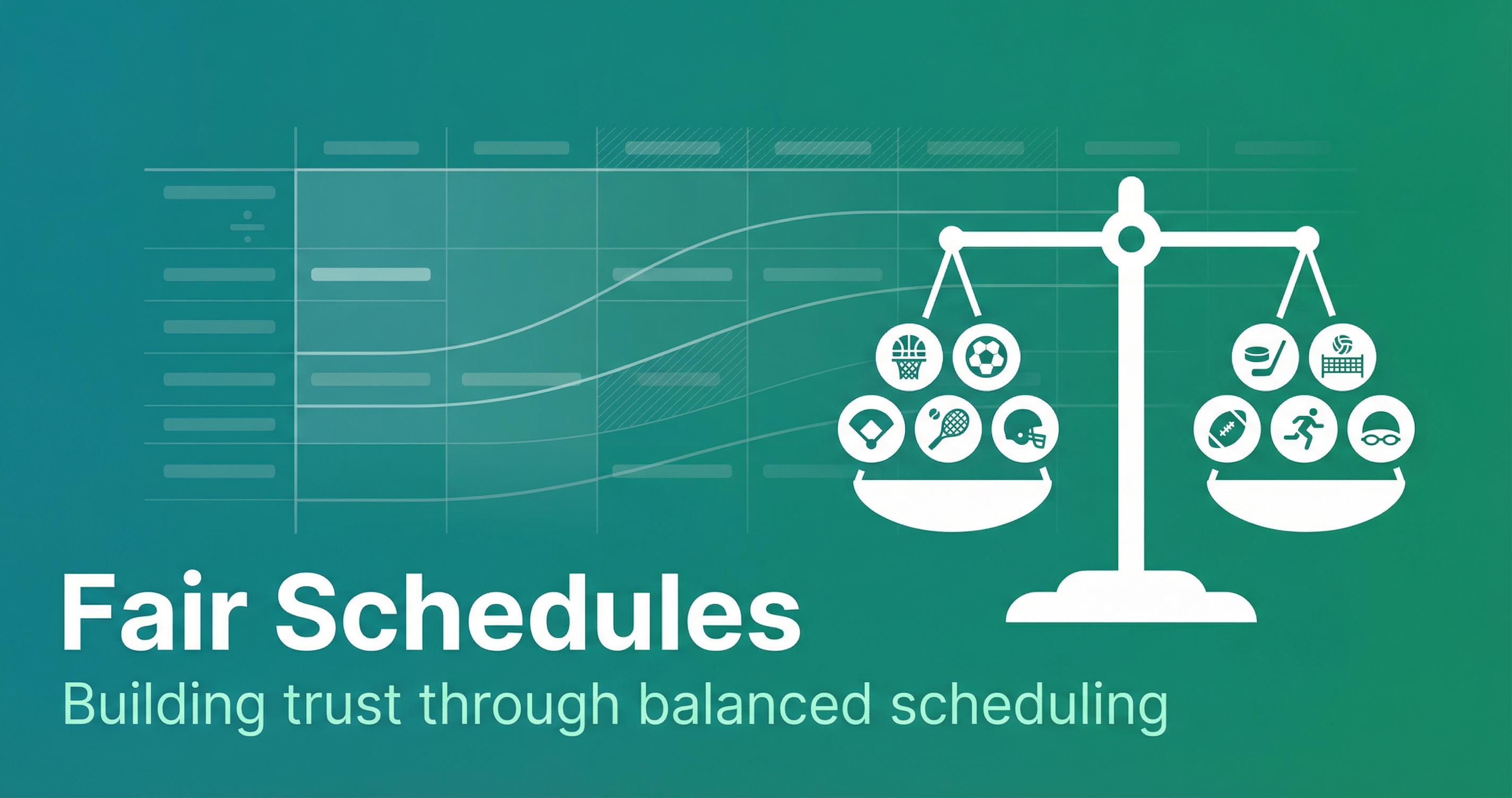
What changes: Travel, facility access, and opponent balance are optimized automatically using fairness constraints.
Fair scheduling delivers:
- Balanced home/away distribution – Every team gets equitable access to home games
- Reasonable travel burden – Total travel distance distributed fairly across conference
- Rest between games – No team faces back-to-back games while others get extended breaks
- Opponent sequencing – Competitive balance prevents clustering of difficult matchups
When schedules are fair, coaching quality determines outcomes—not scheduling luck.
Better Communication
The problem: Schedule updates arrive through fragmented channels—emails, texts, website updates—creating confusion about what’s current.
What changes: Updates are structured, consistent, and delivered through reliable channels with clear version control.
Clear communication means:
- Single source of truth for current schedules
- Automated notifications when changes occur
- Full history of schedule revisions
- Export capabilities for team calendars
You and your athletes know what to expect.
You Stay Focused on Coaching—Not Logistics
Instead of chasing schedule fixes, you focus on what matters:
Training – Practice plans stay intact without last-minute adjustments.
Game prep – Opponent scouting and strategy planning happens on predictable timelines.
Player development – Time spent on skill building instead of administrative firefighting.
Team culture – Consistent operations build trust between coaches, athletes, and families.
Built to Respect Coaching Reality
Effective scheduling systems understand real constraints coaches face:
Multi-Sport Athletes
Many athletes compete in multiple sports. Schedules must account for:
- Overlapping seasons
- Shared athletes between teams
- Practice conflicts across programs
- Recovery time between competitions
Systems that track multi-sport athletes prevent scheduling conflicts that force athletes to choose between teams.
Shared Facilities
Most schools have more teams than gyms. Fair facility allocation requires:
- Transparent priority rules
- Equitable distribution of prime practice times
- Advance notice for facility changes
- Coordination with other school programs
When facility scheduling is clear, coaches can plan training without last-minute location changes.
Travel Fatigue
Long travel days affect performance. Good scheduling considers:
- Total travel burden per season
- Recovery time after long trips
- Geographic clustering for road games
- Academic impact of early dismissals
Optimized travel means your team arrives ready to compete.
Academic Schedules
Student-athletes are students first. Schedules should respect:
- Testing periods and blackout dates
- School calendar holidays
- Instructional time limits
- Academic eligibility timelines
Schedules aligned with academics protect student success.
Weather Disruptions
Outdoor sports face cancellations. Resilient scheduling includes:
- Built-in makeup dates
- Flexible rescheduling options
- Weather contingency plans
- Communication protocols for changes
Having makeup capacity prevents season-end chaos when weather hits.
Trust Is Built Through Stability
When schedules stay stable, everyone benefits:
Teams Prepare Better
Athletes know when games happen. Practice plans align with competition schedules. Scouting and strategy preparation happens on predictable timelines.
Stability enables focus.
Parents Complain Less
Families can plan work schedules, childcare, and travel arrangements with confidence. Fewer last-minute changes mean fewer angry emails and phone calls.
Predictability reduces friction.
Programs Gain Credibility
Consistent operations demonstrate professionalism. Families trust your program when logistics work smoothly. Strong operations support recruiting and retention.
Reliability builds reputation.
What Coaches Should Expect From Scheduling Systems
Modern scheduling platforms should deliver:
Early Season Stability
Schedules published 2-3 weeks before season starts, allowing adequate preparation time. Changes after publication should be rare and well-justified.
Transparent Fairness
Clear documentation of how schedules were built. Explainable decisions when tradeoffs occur. Metrics showing equitable treatment across teams.
Proactive Communication
Automatic notifications for any changes. Clear indication of what changed and why. Direct updates to coaches before families are notified.
Flexible Response
Tools to request schedule changes when necessary. Clear process for conflict resolution. Quick turnaround on legitimate adjustment requests.
Quality Data
Accurate opponent information, venue details, game times, and official assignments. No scrambling to verify basic scheduling data.
Common Scheduling Frustrations—And Solutions
Frustration: Schedule Changes After Team Calendars Are Printed
Solution: Publish schedules earlier with higher quality validation. Catch conflicts before finalization instead of discovering them after distribution.
Frustration: Unbalanced Home/Away Distribution
Solution: Use fairness constraints during schedule generation. Automatically balance home games across all teams in the conference.
Frustration: Back-to-Back Games With No Rest
Solution: Enforce minimum rest requirements as scheduling constraints. Flag violations before schedules are finalized.
Frustration: Long Road Trips Followed By Strong Opponents
Solution: Consider travel burden and opponent difficulty when sequencing games. Avoid clustering difficult matchups after extended travel.
Frustration: Facility Changes Without Notice
Solution: Validate facility availability before schedule publication. Lock venues early and communicate changes immediately when necessary.
Frustration: Unclear Communication Chains
Solution: Centralize schedule information with single source of truth. Automated notifications ensure coaches get updates immediately.
Your Role in Schedule Quality
While scheduling systems handle the heavy lifting, coaches contribute to better outcomes by:
Submitting constraints early – Blackout dates, facility needs, and special requests submitted before scheduling begins.
Providing accurate information – Team rosters, contact details, and program details kept current.
Communicating proactively – Issues flagged immediately rather than waiting until problems escalate.
Respecting system limits – Understanding that perfect schedules are impossible when balancing dozens of constraints.
Engaging with the process – Reviewing draft schedules and providing feedback during validation periods.
Good scheduling is a partnership between coaches and administrators.
Related guides:
- Build Fair Schedules Teams Can Trust – Understanding fairness metrics
- Travel Optimization Guide – Reduce travel burden
See how modern scheduling helps coaches – Platforms like MatchGrid catch conflicts early, enforce fairness automatically, and keep schedules stable so you can focus on coaching. Explore MatchGrid →
Frequently Asked Questions
How much notice should coaches get before schedule publication?
Best practice: 2-3 weeks before season starts. This allows time for practice planning, opponent scouting, and family communication. Draft schedules can be shared earlier for coach feedback, with final schedules locked after validation. Emergency changes may occur, but baseline schedule should be stable before first practice.
What should I do if the schedule seems unfair?
First, understand the constraints that shaped the schedule—facility availability, league requirements, travel limits, and opponent availability all create tradeoffs. Request a fairness review showing metrics like home/away balance and travel distribution. If systemic bias exists, document it and work with athletic directors to adjust scheduling policies for future seasons.
How can I request a schedule change?
Follow your district’s formal change request process. Provide: (1) specific date/game needing change, (2) clear reason for request, (3) proposed alternative dates, (4) understanding of impacts to other teams. Legitimate requests (academic conflicts, documented hardships) usually get approved. Convenience requests may not. Submit early—last-minute changes affect more people.
What happens when weather cancels outdoor games?
Quality schedules include built-in makeup dates at season end. When cancellations occur, check with your athletic director about rescheduling options. Automated scheduling systems can quickly generate makeup options that respect all teams’ constraints. Have a plan for condensed schedules if multiple makeups are needed.
Why do some teams get better practice times than others?
Facility allocation typically follows priority rules: varsity before JV, fall sports during fall season, established programs before new ones. These rules should be transparent and consistently applied. If practice times seem unfair, ask for the allocation policy. Legitimate concerns about equity should be raised with athletic directors for policy review.
How do scheduling systems handle multi-sport athletes?
Advanced systems track athletes competing in multiple sports and flag conflicts when athletes would be scheduled for two teams simultaneously. This requires keeping accurate rosters updated. Coaches should identify multi-sport athletes early so conflicts can be avoided during schedule generation rather than discovered later.
What information should coaches verify after receiving schedules?
Review: game dates and times, opponent names and contacts, venue locations, home/away designations, official assignments (if provided), and any special notes. Verify no conflicts with school calendar, academic events, or facility closures. Check that your blackout dates were respected. Report discrepancies immediately before schedules are distributed to families.
Better Scheduling Supports Better Coaching
Coaching requires focus, preparation, and consistent execution. Schedule chaos undermines all three.
Modern scheduling systems reduce surprises, enforce fairness, and maintain stability—so you can invest energy where it matters most: developing your athletes and building your program.